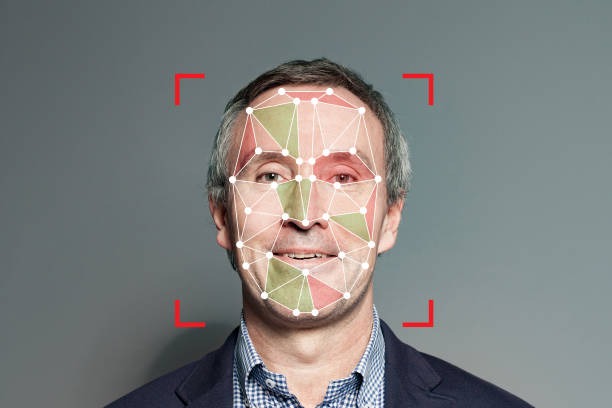
Videos are now a fundamental resource for the business world, the media, scholars and anyone surfing the web. Whether it’s through social media posts, web interviews, business meetings or security footage, video content is becoming a vital way to comprehend a situation and make a decision.People are now using video content to help understand events and make decisions, whether it is a post on a social media platform, a web interview, a business meeting or a security recording. But, thanks to the developments in artificial intelligence, it has become easier to produce realistic synthetic videos and manipulate real footage.
A video could be of a person saying something she never actually said, of a person in a place she never was or involved in an event she never participated in. These manipulations have the potential to lead to misinformation, identity theft, financial fraud, and reputation damage.
Video authenticity verification tools enable users to check if the video has been edited, manipulated and/or AI-generated. The best way is to use automated deepfake detection and visual analysis, metadata analysis, source verification and human review.
It is important to have video authenticity verification for the following reasons:
It’s not always the case that what you see is what you get with a video. Nowadays, editing and generative AI technologies can alter facial expressions, replace faces, recreate voices and create realistic scenes.
This poses problems in a number of respects:
- Business security: Fraudsters can use a fake video to pretend to be an executive or employee.
- Journalism: Footage may be used to misinform and sway public opinion if it is unverified.
- Digital identity: Fake faces and altered recordings may pose problems in the verification process on the internet.
- Social media: Fake videos can harm reputations and give out false information.
- Legal investigations: Video evidence can be a critical aspect of an investigation and needs to be carefully considered before being deemed admissible.
The verification of authenticity for a video may help determine whether an anomaly is present and offer more context when determining whether further investigation is needed.
Use of the best tools and methods to verify the authenticity of video
The users should be aware of the various features of tools and analysis methods and should use them instead of relying on one feature.
1. AI-Powered Deepfake Detection
Deepfake detection tools use artificial intelligence to analyze videos for anomalies that are indicative of synthetic or manipulated media.
They can examine the faces, skin tones, lighting, expressions and discrepancies between the frames of a video. Some systems will also look at the movement of facial features over time.
These can be used to detect manipulated audio recordings, AI-generated faces and potential face swaps. The results, however, are determined by the detection model, the quality of the video and the manipulation method.
2. Frame-by-Frame Video Analysis
Frame analysis is used to analyse individual frames taken from a video. This allows us to look at different aspects that may be hard to see when playing back normally.
Reviewers should check for odd facial lines, shadowed lines that don’t match, odd shapes, odd backgrounds and sudden shifts in visuals.
It’s also possible to see inconsistencies in facial movements or objects in a scene by comparing consecutive frames. When it comes to analyzing footage that looks realistic but is dubious, frame analysis is a great tool to use.
3. Metadata Analysis Tools
Metadata: Data that is connected to a digital file. It can contain a creation date and details of modification, encoding information, and information relating to the device.
Metadata analysis may be helpful for investigators to determine the process that a video has been through. If the information is inconsistent with the time or there are unexpected times, it may warrant further investigation.
But metadata alone cannot be considered conclusive evidence of authenticity. It may be deleted, modified or altered whilst normal file processing and uploads to platform.
4. Digital Forensic Analysis
Digital forensic tools could be used to analyse the technical characteristics of video files. They can assist with the integrity of files, compression analysis, examination of frames, and investigation of file editing traces.
It can be beneficial in corporate investigations, journalism, cybersecurity and legal reviews where the authenticity of the video is significant.
The original file should be taken into account for forensic analysis if possible. Important information can be lost or artifacts seen in the image can make it more difficult to investigate if it is compressed and converted repeatedly.
5. Search with a picture and video
You can use reverse image search to find out if the frame from a video or screenshot is in another online video.
Representative frames can be retrieved and a search can be conducted for previous occurrences. This can indicate if the footage has been used repeatedly, shown with an incorrect caption or been from a different event.
It’s not a rule that there must be an older version of the video, and if there is, it does not necessarily mean that the video is fake. It gives background information which can be used to help confirm its source and purpose.
6. Audio Authenticity Analysis
It is not just the visual that can corroborate video authenticity. Manipulated footage can be more believable if the voice(s) is synthetic and/or the audio is altered.
Audio analysis tools can analyze speech patterns, patterns of acoustics, background sounds, gaps between words and mouth movement, among other things.
This is especially important if the video has statements from a public person, business executive or family member.
7. Liveness Detection
The liveness detection can be used to verify if the biometric sample is from a living human being or from a photograph, prerecorded video or another presentation attack.
It’s particularly applicable to digital onboarding and identity verification by remote. Some systems analyze the facial movements from a submitted sample or user interaction or other indications to determine whether the sample is a capturing.
The purpose of liveness detection and deepfake detection are different. Liveness detection is based on the fact that the biometric input was live or not, whilst deepfake detection is on the characteristics of synthetic or manipulated media. Both of these alone do not provide a way to guarantee that a person or a video is authentic or that a video is in its entirety authentic.
Source and context verification
This involves verifying the source and context of the text.
The video should have been independently verified as being from the source indicated.
Valuable checks are to see who originally uploaded the video, the video’s publication dates, the consistency with trusted reporting and whether the events and location in the video correspond with its description.
A properly created video can still be deceptive if it’s edited or used in an out of context manner, or if the accompanying text is inaccurate. Source/Trace verification is a solution to these issues.
The following are important features to consider when choosing video verification tools
The following features are important when assessing video authenticity solutions:
- Multiple media formats: Check that the video formats and file sizes are supported.
- Inspection of individual frames: By looking at individual frames, one can also find some small inconsistencies.
- Audio examination: Audio analysis can be helpful in investigations of voice cloning or manipulated speech.
- Clear results: Detection reports should describe the findings and convey uncertainty, not make a final decision.
- Protection of privacy: Examine the privacy protection of the uploaded videos with regard to the way they are stored, processed, accessed and retained, especially if they contain personal, confidential information.
- Integration options: There are tools that can integrate into current security, identity verification or investigation processes.
- Ongoing monitoring: Detection systems must be regularly tested to keep pace with the ongoing development of generative AI methods.
How to Check if the Video is Original
There is a way to minimize the danger of using manipulated footage: a structured verification process.
- Keep an original recording: If possible, keep the original recording and not the social media compressed version.
- Look for the source: Determine the original source of the video and credibility of the source.
- Analyze visual information: Analyze facial features, lighting, shadows, movement, and consistency of background.
- Analyze audio: Check for unnatural voice tone, audio distortion, or tongue lifting/locking.
- Check metadata: Look at the metadata that is available to give you clues as to the history of the file.
- Utilize detection software: Send in suspicious footage to a relevant analysis system and look at their results.
- Verify independently: Recheck critical information from trusted sources and look for more evidence.
This is more reliable than being able to make an authenticity determination from a visual inspection.
The capacity to recognize Deepfakes is not foolproof
Deepfake Detection Technology has its own set of restrictions.
The best video verification tool will never deliver 100% accuracy. There could be cases where a heavily compressed video or footage, low lighting, unusual camera angles, low resolution recordings or unfamiliar manipulation techniques make it difficult for deepfake detection systems to identify the fake.
There also may be false positive results. It is possible to have visual artifacts in genuine video due to the editing, compression, poor recording quality, or typical camera effects.
The second one is that AI generation techniques keep getting better. Detection systems need to be tested on a regular basis to determine how well they perform, relative to newer techniques.
The findings of automated decisions must be reviewed by qualified personnel in situations of high risk. Detection scores are not evidence that the video is genuine or fake, they are indicators which can assist with investigation.


